

"I’ve been looking for a natural and affordable solution for my skin, and this ACV toner sounds like a great…
Understanding the Fermentation Process of ACV
- Home
- Understanding the Fermentation Process of ACV
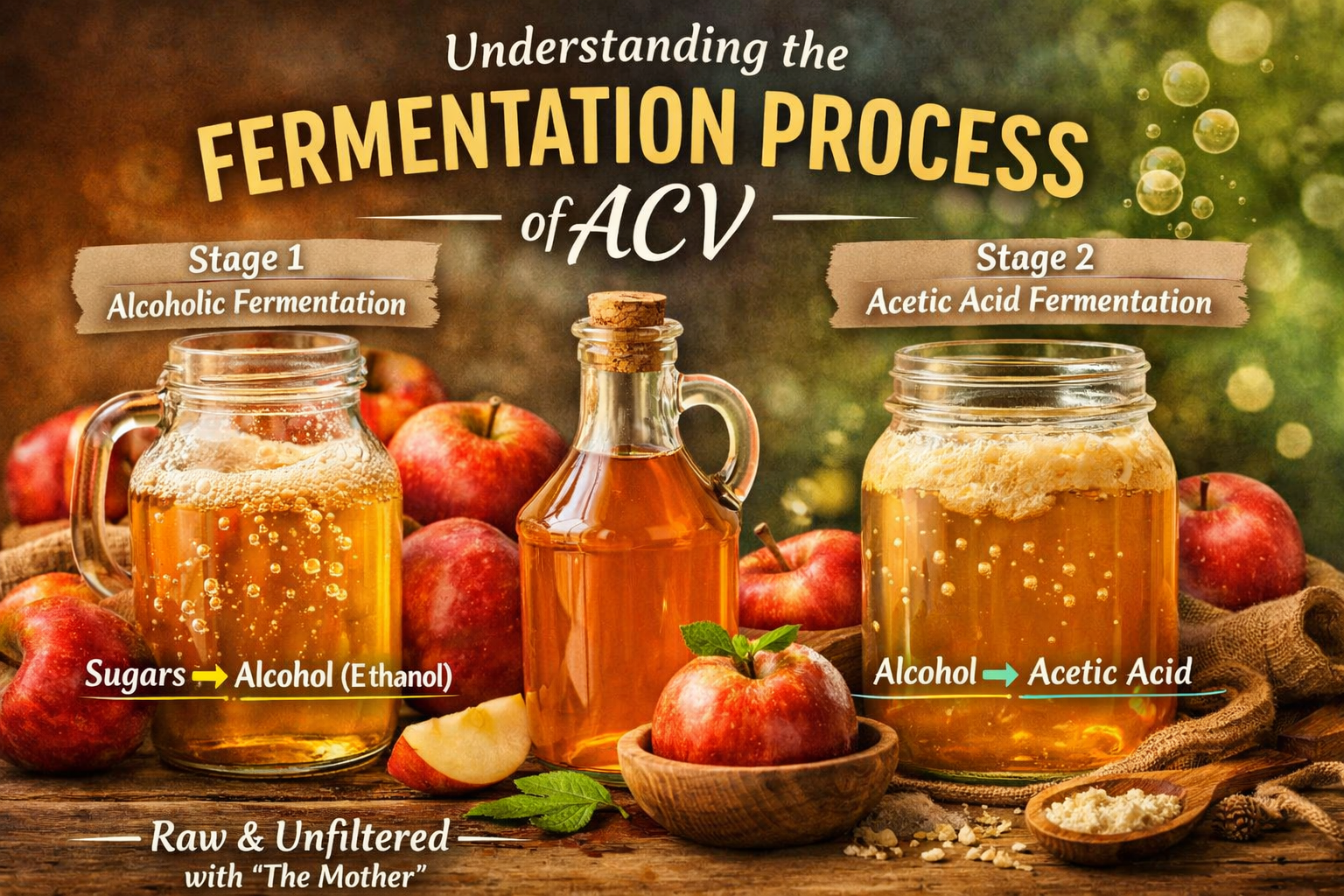
Understanding the Fermentation Process of ACV
Apple cider vinegar (ACV) has become a staple in health-conscious households around the world. From supporting digestion to enhancing skin health, its benefits are widely discussed. But what truly makes ACV powerful is the natural fermentation process behind it. Understanding how ACV is made not only deepens appreciation for this traditional remedy but also helps you choose the highest quality product for your needs.
In this comprehensive guide, we’ll explore the fermentation process of ACV step by step, uncover the science behind it, and explain why raw, unfiltered apple cider vinegar is considered the best.
What Is Apple Cider Vinegar (ACV)?
Apple cider vinegar is a type of vinegar made from fermented apple juice. It contains acetic acid, beneficial bacteria, enzymes, and trace nutrients that contribute to its health properties.
Unlike regular white vinegar, ACV—especially raw and unfiltered varieties—contains what is known as “the mother.” This cloudy substance consists of proteins, enzymes, and friendly bacteria formed during fermentation.
The Two-Step Fermentation Process of ACV
The fermentation process of ACV occurs in two main stages:
- Alcoholic fermentation
- Acetic acid fermentation
Each stage plays a crucial role in transforming fresh apples into a potent health tonic.
Stage 1: Alcoholic Fermentation
The first step begins with fresh apples or apple juice.
How It Works
- Apples are crushed to extract juice.
- Natural sugars in the juice become the primary fuel.
- Yeast (either naturally occurring or added) breaks down the sugars.
The Science Behind It
During this stage, yeast converts sugars like fructose into ethanol (alcohol) and carbon dioxide. This process is similar to how wine or beer is made.
Chemical Reaction Simplified:
Sugar → Alcohol (ethanol) + Carbon dioxide
Key Factors
- Temperature: Ideally between 20–30°C
- Oxygen: Limited oxygen is needed at this stage
- Time: Typically 1–3 weeks
At the end of this stage, you essentially have hard apple cider (alcoholic liquid).
Stage 2: Acetic Acid Fermentation
The second stage is where ACV truly forms.
How It Works
- The alcoholic liquid is exposed to oxygen.
- Acetic acid bacteria (Acetobacter species) convert alcohol into acetic acid.
The Science Behind It
This process is aerobic, meaning it requires oxygen. The bacteria feed on ethanol and transform it into acetic acid—the main active compound in vinegar.
Chemical Reaction Simplified:
Alcohol (ethanol) + Oxygen → Acetic acid + Water
Key Factors
- Oxygen: Essential for bacterial activity
- Temperature: Around 25–30°C
- Time: Several weeks to months
This stage gives vinegar its sour taste and strong smell.
What Is “The Mother” in ACV?
During fermentation, a gelatinous, cloudy substance may form. This is known as “the mother.”
Composition of the Mother
- Beneficial bacteria
- Enzymes
- Proteins
- Cellulose
Why It Matters
The mother is a sign of high-quality, unfiltered ACV. It is believed to contain probiotics and enzymes that support digestion and gut health.
Many commercial vinegars are filtered and pasteurized, removing the mother and reducing potential health benefits.
Types of ACV: Raw vs. Processed
Understanding the fermentation process helps explain the difference between raw and processed ACV.
Raw, Unfiltered ACV
- Contains the mother
- Not pasteurized
- Rich in enzymes and beneficial bacteria
- Often organic
Filtered and Pasteurized ACV
- Clear appearance
- No mother
- Longer shelf life
- Fewer nutrients
For health purposes, raw and unfiltered ACV is generally recommended.
Benefits of the Fermentation Process
The fermentation process of ACV creates compounds that contribute to its health benefits.
1. Production of Acetic Acid
Acetic acid is the main active ingredient in vinegar. It may:
- Help regulate blood sugar levels
- Improve insulin sensitivity
- Support weight management
2. Formation of Probiotics
Although ACV is not a high-probiotic food like yogurt, raw versions contain beneficial bacteria that may support gut health.
3. Enzyme Development
Enzymes formed during fermentation help with digestion and nutrient absorption.
4. Antioxidant Compounds
Fermented apples retain some antioxidants, which help fight oxidative stress in the body.
Factors That Influence ACV Fermentation
Several variables affect the quality and effectiveness of the final product.
1. Apple Quality
Organic, fresh apples produce better vinegar with more nutrients.
2. Fermentation Time
Longer fermentation often leads to richer flavor and higher acetic acid content.
3. Oxygen Exposure
Essential for the second stage—without oxygen, acetic acid cannot form properly.
4. Temperature Control
Too high or too low temperatures can disrupt microbial activity.
How to Make ACV at Home
Making your own ACV is a rewarding way to understand fermentation firsthand.
Ingredients
- Apples or apple scraps
- Sugar (optional)
- Water
Basic Steps
- Chop apples and place in a jar
- Add water to cover them
- Add sugar to boost fermentation (optional)
- Cover with cloth (not airtight)
- Stir daily
After 2–3 weeks:
- Strain out solids
- Continue fermenting liquid for another 3–4 weeks
You’ll notice the smell becoming more acidic over time.
Common Mistakes During Fermentation
Avoid these pitfalls when making or choosing ACV:
1. Using Chlorinated Water
Chlorine can kill beneficial bacteria.
2. Sealing the Container Too Tightly
Fermentation gases need to escape.
3. Not Stirring Early Stages
Prevents mold and ensures even fermentation.
4. Poor Hygiene
Contamination can ruin the batch.
How to Identify High-Quality ACV
When buying ACV, look for these signs:
- Cloudy appearance
- Presence of “the mother”
- Organic label
- Raw and unfiltered description
Avoid products that are overly clear unless you only need vinegar for cleaning or cooking.
Uses of Apple Cider Vinegar
Understanding the fermentation process highlights why ACV is so versatile.
Culinary Uses
- Salad dressings
- Marinades
- Pickling
Health Uses
- Digestive support
- Blood sugar management
- Detox routines
Beauty Applications
- Hair rinse
- Skin toner
Is the Fermentation Process Safe?
Yes, when done properly, fermentation is safe and has been used for thousands of years.
Safety Tips
- Use clean equipment
- Avoid mold (white film is okay; fuzzy mold is not)
- Store in a cool, dark place
If ACV smells strongly sour but not rotten, it’s usually safe to use.
The History of Vinegar Fermentation
Fermentation is one of the oldest food preservation techniques known to humanity.
Apple cider vinegar has been used for:
- Ancient medicine
- Food preservation
- Cleaning and disinfecting
Its popularity continues today thanks to growing interest in natural health.
Why Fermentation Matters
The fermentation process of ACV is what transforms simple apple juice into a powerful natural product. Without fermentation:
- No acetic acid would form
- No beneficial bacteria would develop
- No “mother” would exist
In short, fermentation is the heart of ACV’s effectiveness.
Final Thoughts
Understanding the fermentation process of ACV helps you make better choices—whether you’re buying it or making it at home. This natural transformation, driven by yeast and bacteria, is what gives apple cider vinegar its unique properties and health benefits.
By choosing raw, unfiltered ACV and appreciating the science behind it, you can fully harness its potential for health, cooking, and daily wellness.
Frequently Asked Questions (FAQ)
How long does ACV fermentation take?
Typically 4 to 8 weeks, depending on conditions.
Can ACV go bad?
ACV has a long shelf life due to its acidity, but quality may decline over time.
Is the mother necessary?
While not essential, it indicates higher quality and potential health benefits.
Why does my ACV look cloudy?
Cloudiness is usually a sign of the mother and beneficial compounds.
By mastering the basics of fermentation, you not only understand ACV better—you unlock the science behind one of nature’s most powerful traditional remedies.
- Share

Dailyacv
Recent Comments
Thanks you for advise I will try that
